


 Djeart
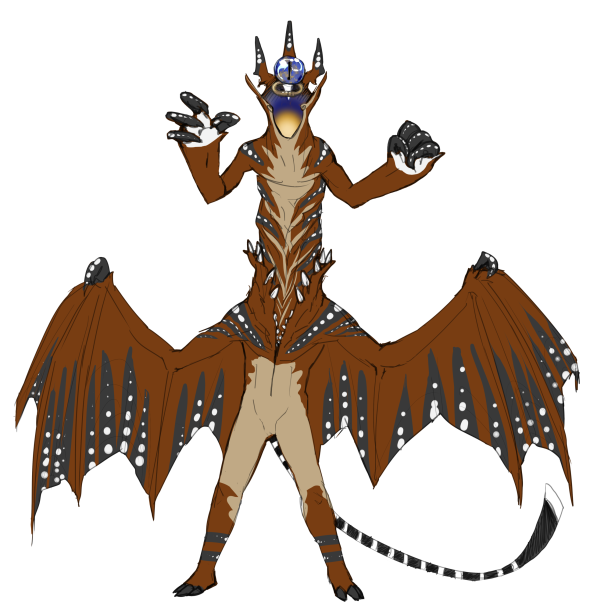
Strength in social structures, unwavering fortitude, the strongest of flying taothomet, Djeart are a group not to be displeased. Their knowledge for technology and alchemy is great, but their need for entertainment, mixed with their abundance of emotions and tendency to get bored, has led their heka usages to wild new realms. If anyone likes an improvised do-it-yourself project, it's a Djeart.
Red Spine
zhar'et
280 – 300 years
155 – 193 cm / 5'1" – 6'4"
 2x base height ~ unknown
59,000,000






*
Renaissance
Eithelat have a longer body in their renaissance form, and the Djeart retained that, only now as a terrifying display of body horror, as if shedding and unzipping their own flesh when they change forms. This form has its length limits, but most wouldn't be able to tell with how much they simulate a tape measure.
Illandrach Epoch
- A lovely place for the Djeart.
- They attempted to remove the salt from the water, only they were one and the same, alive, and was either killed, or disappeared entirely.
- Either way, Djeart proclaimed victory and enjoyed their, now newly dry, wasteland.
Just before Quaternion Crescendo
- Evidently the ends justify the means, and was enjoyable.
The sovereign, Pero, "Head of the House", comes from a lineage of past rulers. A Perotek, "Head of the House of Your Own", is an elected official usually chosen in the event of no other heirs to the house. The military will hold elections that are heavily weighed by civilian influence; pleasing the populace being the number one concern, as Djeart are quick to displeasure, and dealing with an enraged Djeart can be frightening. They usually favour the fiercest combatants to lead them, as a good fight always proves entertaining.
Each district is headed by a Heritep, which have the power to rule their district distinctly from the Pero. This gives them plenty of flexibility for how they want to run their territory, and being a nomarch is too lucrative to risk losing to hubris.
Next in the ranking are military, and any officials working directly under either Pero or Heritep, such as scribes. Under them are farmers, artisans, merchants, and servants.
They believe the essence of life comes from the heart, and when life dies the hearts return to their source, where the Keeper resides and allows life to continue on. To accomplish this the heart is removed and buried to return it to Umeon, the is then body burned, and from here they believe the planet absorbs and holds the essence of the person and of the Keeper.
Djeart hold their beliefs in a different angle: the Keeper they know and believe in doesn't exist in actuality and they know it, but believe in the concept of it—similar to the concept of luck or fate. In order for it to exist they must believe in it, and to believe in it allows their spines to unite at their final resting place, Abax Teset.
They use the language of the Mentandgar, Tefer, but with their own dialect, which has a heavy emphasis on using older words.